Salma Abdelghany
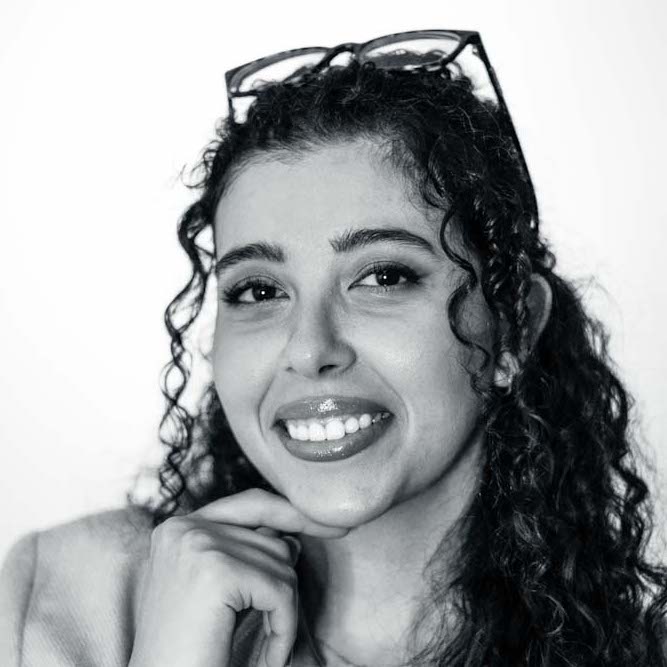
Profession: Architect, Artist
City: Dubai
Country: United Arab Emirates
What inspired you to want a life in Architecture and the creative industries?:
I grew up in a fairly architectural household and had an art-filled upbringing. Curiosity has always driven me. From a young age, I found myself exploring the many facets of the art world, constantly drawn to learning new forms and mediums. That curiosity has not faded. It has only expanded. To me, architecture and art are not separate disciplines but rather a unified language. They have become tools through which I explore my interests and engage with the communities I hope to contribute to. I recently completed my Part 2 at Newcastle University, and throughout that journey, I became increasingly fascinated by the idea of origin. The origin of people, of thoughts, of behavior, of movement, of physiology. That inquiry even extended into the world of ants, as I explored the parallels between human and non-human social systems and behaviors.
As a child, I never imagined I would one day be researching topics like superorganisms or kin selection. But somehow, the skills I picked up through pure curiosity, whether drawing, observing, or making, have become the very tools I use to communicate my ideas today, not only to architects but to a broader audience. Art, in all its forms, has become a way of making sense of the built world and the people within it.
Who inspired you in finding your path to Architecture/Film and the creative industries?:
My family played a huge role in shaping my path. Both my parents are architects, and architecture quickly became a third language spoken at home. It was always inspiring to see how they viewed the world and approached their work. I also come from a wider family of artists, architects, and engineers, so creativity and design were constantly present around me. It felt natural to grow into that world and eventually find my own place within it.
How you unlock obstacles and overcome bias in your work?:
When I face obstacles or moments of doubt, I often turn to my other creative worlds such as photography and art. They help me step away, process the weight or anxiety of the work, and return with clarity. Expression becomes a way of digesting what feels overwhelming, breaking it down before I re-engage with the architectural process.
I tend to absorb research through making. My architectural drawings and models are not just tools for communication, but tools for thinking. They have become declarations in their own right and extensions of the research itself. Making and process are central to how I work, though not always in conventional ways. I draw inspiration from fields that are often seen as unrelated to architecture, including film, animation, visual art, graphic design, and sculpture. This sits alongside more traditional research methods such as case studies of pioneering architectural work.
Bridging disciplines helps me move through creative blocks and overcome biases because it keeps my thinking fluid, open, and always evolving.
What improvements do you feel are required to promote effective change in the academic and working environment?:
In the academic world, I found there is often a misconception about what it means to be different. It is sometimes reduced to using unconventional colors or reinventing processes for the sake of appearing unique. But I have learned that real change comes from embracing existing systems and reshaping them through our own lens of interest and intention.
There is a constant pressure to have everything finely tuned and perfectly resolved, often driven by the fear of failure. But once that pressure is lifted, and exploration is allowed for its own sake, the process becomes far more rewarding. The most meaningful outcomes come not from striving to be outstanding for the sake of it, but from trusting ourselves as agents of change. By creating space for experimentation, adaptability, and honest engagement, we open the door to impactful and lasting transformation in both academic and working environments.