
Robert Kin Ming Wong
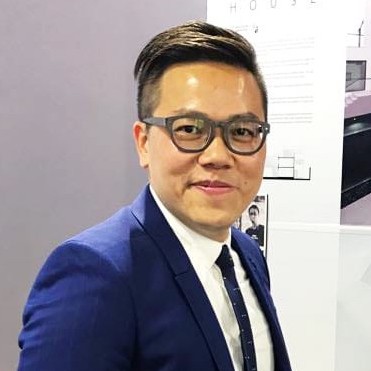
Profession: Architecture
City: London
Country: United Kingdom
What inspired you to want a life in Architecture and the creative industries?:
My belief that everyone should have equal opportunities to be involved in, participate in, and access architecture and our built environment is rooted in my own lived experience.
I grew up in a family of six in a two-bedroom unit of less than 300 square feet in Kwun Tong, a poor district in Hong Kong. As the eldest son of a handyman, I spent much of my childhood helping in my father’s hardware store or collecting discarded electrical wires to sell for pocket money. From an early age, I became acutely aware of how space, environment, and social conditions shape dignity, opportunity, and belonging. A turning point came during my secondary school years, when I first volunteered in the Diamond Hill shantytown in Hong Kong. Spending time with underprivileged children there reflected my own upbringing and made clear to me that inequality is spatial as much as it is social. Initially, I aspired to become a social worker, but through mentorship at the Chinese University of Hong Kong’s School of Architecture, I came to understand architecture as a powerful tool for social change, the one that can materially improve people’s living conditions when grounded in care and inclusion.
Since then, my work has focused on integrating architecture, education, and social impact. As a practitioner and founder of IDEA, I have co-created learning environments with children, communities, and volunteers, both locally and internationally. These experiences have reinforced my belief that architecture should be participatory, not imposed, and that education spaces designed with their users foster belonging, agency, and long-term impact. For me, architecture is not about iconic buildings, but about empowering people, children and the disadvantaged to shape the environments they inhabit.
Who inspired you in finding your path to Architecture/Film and the creative industries?:
Professor Freeman Chan, School of Architecture, The Chinese University of Hong Kong
How you unlock obstacles and overcome bias in your work?:
I believe architecture is design for all, and that architects have a responsibility to listen to users in order to understand their needs before translating them into thoughtful, inclusive design solutions. Obstacles and bias are best addressed by embedding co-design as a strategic leadership approach, enabling meaningful engagement and the translation of lived experience into informed design decisions.
In our design approach, we strive for architectural excellence while balancing people-centred insight with technical expertise. Through this balance, holistic design solutions are developed that are socially responsive, economically viable and sustainable. This integrated approach is essential to achieving architecture with design merit, cost efficiency, social impact and the long-term value for communities.
What improvements do you feel are required to promote effective change in the academic and working environment?:
To promote effective change in academic and working environments, architectural education should embed community-based workplace internships and placements within social enterprises. This is a core component of professional training. Direct engagement with communities and mission-driven organisations enables students to better understand social needs and operational constraints, while stimulating critical thinking around opportunities for social innovation.
These internships would complement studio-based learning by grounding architectural education in lived experience, encouraging future architects to listen, collaborate, and design responsibly. Exposure to social enterprises also helps address bias by introducing alternative ways of thinking and practice, including innovative business models that integrate social, environmental, and economic value.
By formalising community workplace internships within architectural education, graduates would be better equipped to deliver people-centred, innovative, and socially responsive architecture, while developing an entrepreneurial mindset that supports long-term, sustainable impact.