Odilia Renaningtyas Manifesty
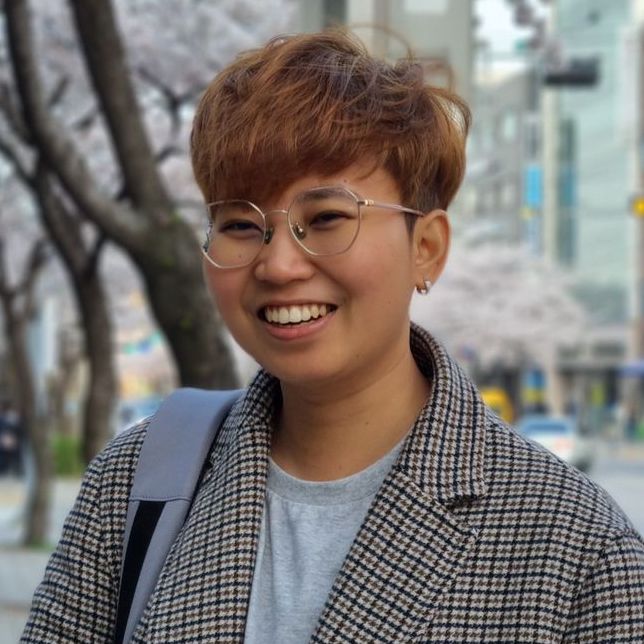
Profession: Assistant Professor
City: Yogyakarta
Country: Indonesia
What inspired you to want a life in Architecture and the creative industries?:
I’ve always been fascinated by how space shapes people’s lives — not just buildings, but the way streets, neighborhoods, and cities influence how we feel, behave, and connect with one another. Architecture for me was never only about construction or aesthetics; it was about storytelling, about embedding meaning into everyday environments.
What inspired me to pursue this path was the realization that design is both imaginative and responsible. It requires creativity — to envision new forms and possibilities — but also sensitivity, because our designs affect communities, wellbeing, and culture. That combination of creativity and social impact is what drew me in.
I’ve also always loved moving between disciplines — from architecture to urban design, and even into digital and computational methods. The creative industries gave me a language to explore ideas visually and conceptually, while architecture and urbanism gave me the grounded framework to turn those ideas into real, lived spaces. That balance between imagination and impact continues to inspire me.
Who inspired you in finding your path to Architecture/Film and the creative industries?:
I decided to start Architecture because I loved both science and arts at the same time. As time passed, the people I met along the way motivated me to keep going. There was one professor from my undergraduate who taught urban design, and I think that was when I truly fell in love with cities — how they are this mix of everything.
During my Master’s, I met a classmate who was deeply passionate about urban design. Their energy and dedication were contagious, and it made me realize that this field is not only about design theory, but also about commitment — to research, to people, and to the future of our cities.
Later, during my doctoral study in South Korea, Jeon Seo Eun, CEO of Localinsa, inspired me to explore regional cities and connect with local communities. From her, I learned that cities are never just physical environments; they are living systems of diversity, whether in ecology, culture, or people. Those encounters and inspirations have shaped how I see architecture and urbanism today — as a creative practice rooted in both imagination and real human connections.
How you unlock obstacles and overcome bias in your work?:
I try to approach obstacles in my work the way I approach cities — by seeing them as layered and complex, rather than as fixed walls. When I face a challenge, I break it down into smaller parts, understand where the constraint is coming from, and then look for alternative paths. Sometimes that means going back to fundamentals, other times it means being open to new tools or collaborations.
When it comes to bias, I’ve learned that awareness is the first step. In architecture and urbanism, bias can appear in how we assume people will use a space, or whose voices get heard in planning processes. I try to overcome this by listening carefully to diverse perspectives — whether from local communities, colleagues from different disciplines, or even through data and narratives that reveal hidden patterns.
In short, I unlock obstacles through persistence and flexibility, and I address bias by grounding my work in inclusivity and evidence. Both require humility, and the willingness to keep learning.
What improvements do you feel are required to promote effective change in the academic and working environment?:
I think one of the biggest improvements needed is creating environments that are less hierarchical and more collaborative. In both academia and professional practice, there’s often too much distance between senior and junior voices. Making space where younger scholars, students, or junior staff can contribute ideas without fear of judgment is essential for innovation.
Another improvement is to better integrate interdisciplinary thinking. Many of today’s challenges — whether in architecture, urbanism, or the creative industries — don’t fit neatly within a single discipline. We need structures in academia and workplaces that encourage crossing boundaries, where people from design, science, technology, and social sciences can really work together.
Finally, I believe we need to prioritize wellbeing. Burnout, overwork, and competition are still normalized in many academic and professional settings. If we want effective change, we have to create cultures that value balance, care, and support alongside productivity. When people feel included, respected, and healthy, they can do their best work — and that’s when real change happens.